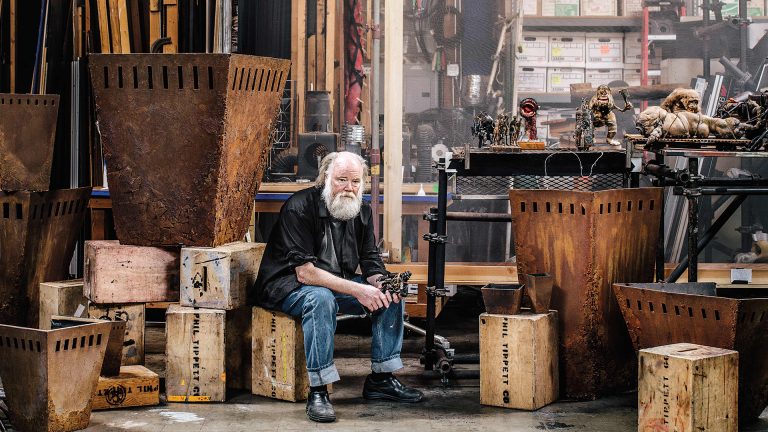


Phil Tippett is more than a master of special effects—he is a visionary who has redefined how we perceive creatures, puppets, and visual storytelling in cinema. For us at Galaxy Diorama, his work is more than a technical reference: it is pure inspiration, a living example of how passion, artistry, and dedication can transform dreams into reality.
Tippett’s career, beginning in the 1960s, spans decades of innovation, experimentation, and challenge. Stop-motion was never just a technique for him—it was a language, a way to breathe life into worlds that would otherwise exist only in imagination. At the VIEW Conference 2025 in Turin, Tippett shared not only his journey but also the philosophy that has guided Tippett Studio for over fifty years.
Phil Tippett played a pivotal role in reviving stop-motion within the Star Wars universe. His collaboration with Lucasfilm and Industrial Light & Magic (ILM) brought unprecedented innovations, transforming puppets and models into fully realized, believable characters capable of interacting with actors and conveying complex narratives. Every detail—posture, texture, movement, lighting—became an essential part of the story.
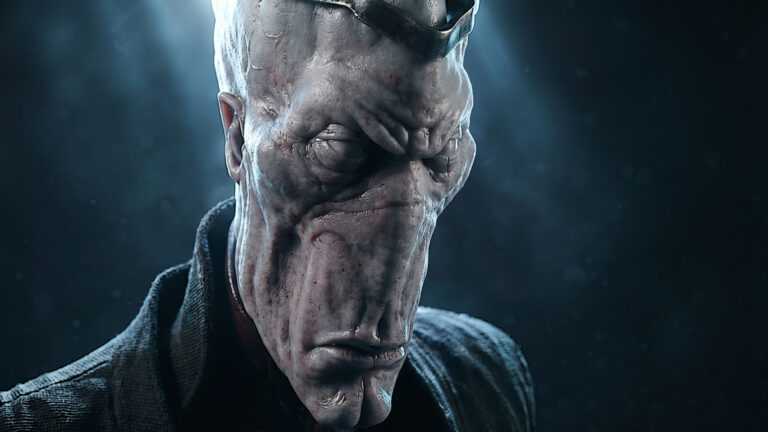
During the panel “SENTINEL and AI: Know Your Foe!”, Tippett demonstrated how Tippett Studio merges traditional craftsmanship with cutting-edge technology: practical modeling, 3D printing, VFX workflows, and AI tools. The message was clear: technology should serve the art, never replace it.
The following day, at “Stop Motion: Bring the Goods”, we revisited the milestones of stop-motion, from the Dejarik Holochess puppets in Star Wars: Episode IV to The Mandalorian and Skeleton Crew. Each project highlighted the dialogue between hand-crafted artistry and digital innovation, producing worlds that feel both tangible and alive.
Tippett shared his insights:
On stop-motion: “It’s like taking 30,000 years of art—sculpture, painting—and channeling it into a machine running at 24 frames per second. It lets you create a reality that exists only in imagination.”
On AI: “No one knows where it will go, but stop-motion endures because audiences still find it captivating, unexpected, magical.”
On Star Wars: “Before I became the father of Jabba The Hutt, I used motion control techniques to make puppets feel real. It was a bridge to computer graphics, but it completely transformed the way we worked.”
For Tom “Gibby” Gibbons, it all began as a child watching Star Wars: A New Hope (1977). It wasn’t the starships or battles that captured him—it was the monsters on the Dejarik Holochess table. That tiny detail became his lifelong obsession, eventually leading him, nearly forty years later, to animate that very sequence in The Force Awakens (2015).
“It’s surreal,” Gibbons reflects. “As a kid, I stared at that game table, and decades later I was animating it for real.”
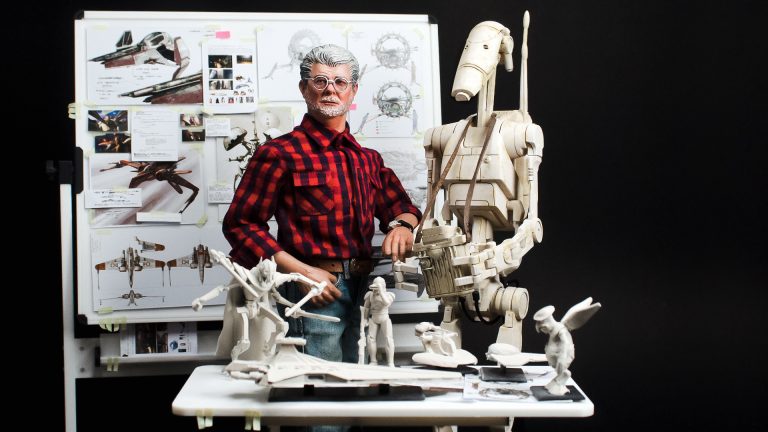
At Lucasfilm and ILM, Phil Tippett and Jon Berg had already convinced George Lucas to employ stop-motion for the Dejarik sequence. Ten puppets were created, eight used on screen, animated with meticulous care—a brief but unforgettable moment that ignited a renaissance of stop-motion, influencing subsequent projects like The Empire Strikes Back and Indiana Jones.
In Tippett Studio’s Berkeley workshop, stop-motion and computer graphics coexist seamlessly. Artists like Gibbons, Mark Dubeau, and Chris Morley blend hands-on craft with digital precision, giving puppets both life and story. The recreation of the Holochess table for The Force Awakens sparked a decade-long collaboration with Lucasfilm, including The Mandalorian, The Book of Boba Fett, and Skeleton Crew—each project expanding the possibilities of stop-motion in the Star Wars universe.
Every puppet is a miniature marvel. From internal armature design to material selection and frame-by-frame animation, the studio combines artisanal and digital expertise. Brett Foxwell, Mark Dubeau, and Frank Ippolito recount studying the original pieces at Skywalker Ranch, rebuilding armatures and details, and imbuing each puppet with its own narrative “personality.”
Tippett Studio’s creativity knows no bounds. From AT-AT-inspired Walkers in The Mandalorian to the B’omarr spider in The Book of Boba Fett, each creation demands ingenious solutions: 3D printing, invisible rigging wires, and life-sized terrains for authentic interaction with light and shadow. Every movement is carefully calculated to feel natural, almost alive—turning stop-motion into a tangible, immersive experience akin to a miniature diorama brought to life.
With Skeleton Crew, the “Trash Crab” was born: a giant creature fusing Harryhausen’s traditional approach with digital sophistication. John “JD” Daniel explains:
“We don’t work in silos. Everyone collaborates on every phase—sculpting, armature building, animation, and digital compositing. It’s a creative laboratory, almost a dream factory, where every detail matters.”
The Trash Crab is more than an effect: it’s a fully realized miniature world, animated in real time, carrying the same magic that inspires diorama builders everywhere.
Tippett’s work on Jabba the Hutt remains an iconic example of vision, craftsmanship, and ingenuity. Initially conceived by Lucas as a snail-like creature with antenna eyes and a wide mouth, Tippett reimagined Jabba as a pulsating mass of flesh inspired by actor Sydney Greenstreet. The massive puppet, built by Stuart Freeborn, weighed roughly a ton, was completed in three months, and cost half a million dollars.
Operated by six puppeteers, each controlling head, mouth, arms, or tail; eyes were radio-controlled.
Internal fiberglass structure suspended on springs, layered with airbags and latex skin, exuding the scent of lubricants, glue, and paint.
Huttese dialogue combined animal sounds, human recordings, and tuba music.
Jabba wasn’t just a puppet—he was alive on set, interacting with actors in a fully immersive way.
In 1997, for the A New Hope Special Edition, Lucas replaced Declan Mulholland with CGI Jabba. Subsequent updates in 2004 refined the digital model, which also appeared in Episode I: The Phantom Menace, maintaining continuity with the original trilogy.
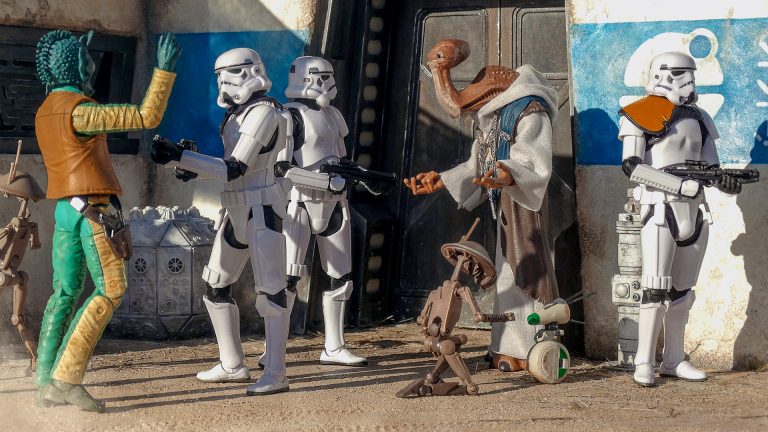
Inspired by Tippett’s artistry, we created a dedicated STL set for Jabba, including action figures and a Deluxe Throne in 1:12 scale, compatible with Hasbro’s Black Series.
Interchangeable features: sleepy, open, or wide-eyed eyes; closed, open, or tongue-out mouth; multiple arms and hands.
Throne and accessories: removable hookah, Klatooine frog aquarium, cushions, tables, fruit, and more.
Every puppet, detail, and pose pays direct homage to Phil Tippett’s mastery, extending his magic into our dioramas and modeling work.
From the Dejarik monsters to the colossal Trash Crab, Tippett has shown that stop-motion is not mere nostalgia but a vibrant, powerful creative choice. For Galaxy Diorama, his work is a guiding light: each puppet, scene, and gesture has inspired us to create dioramas that tell stories, evoke emotion, and feel alive.
Light & Magic – Disney+: A documentary series exploring the history and innovation of Industrial Light & Magic, the legendary visual effects studio behind Star Wars and many other iconic films, available on Disney+. Watch Light & Magic on Disney+ (lucasfilm.com)
Phil Tippett: Mad Dreams and Monsters: A documentary feature chronicling the life, career and creative legacy of stop‑motion and visual effects artist Phil Tippett, from his early work to his most personal projects. Watch Phil Tippett: Mad Dreams and Monsters (e.g., on Prime Video) (primevideo.com)
Mad Dreams and Monsters: The Art of Phil Tippett and Tippett Studio by Alexandre Poncet and Gilles Penso – A comprehensive illustrated retrospective on the career of Phil Tippett and his studio, covering decades of groundbreaking work in visual effects and animation. Find Mad Dreams and Monsters: The Art of Phil Tippett and Tippett Studio (guides.library.ucla.edu)